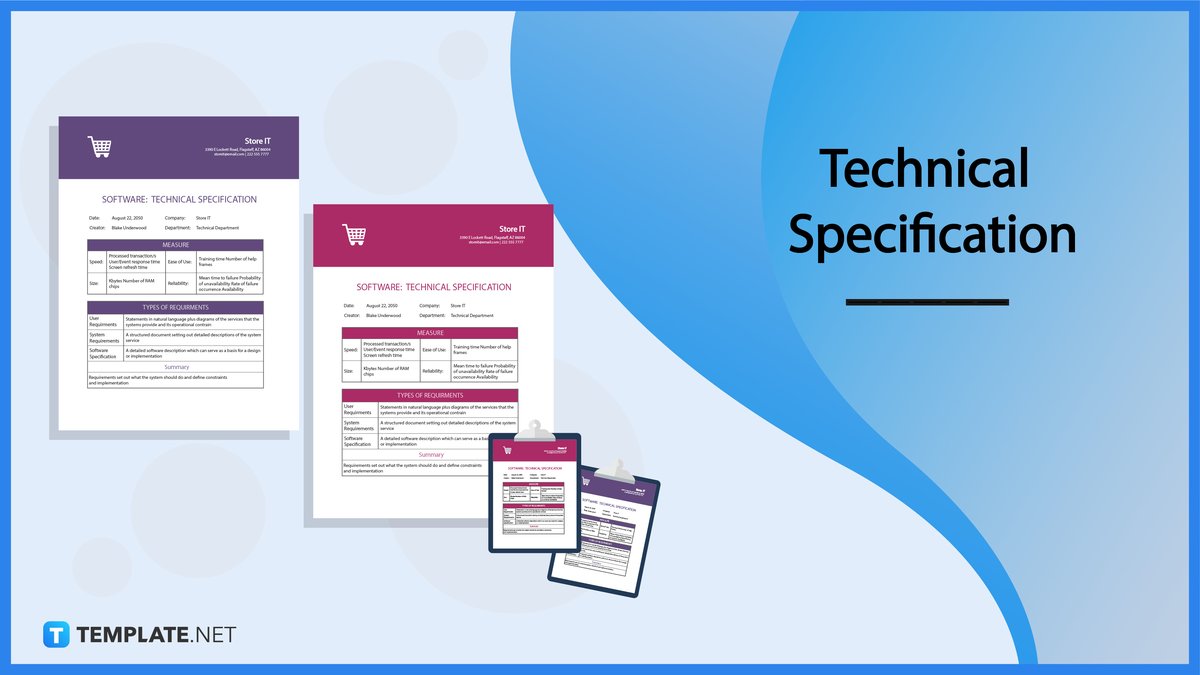
Projects don't just happen; they're built on a foundation of precise planning and crystal-clear communication. And at the heart of that foundation lies a document that acts as your project's North Star: Technical Specifications & Features. This isn't just dry paperwork; it's the meticulous blueprint that transforms a brilliant idea into a tangible, high-performing reality. Without it, you're not building; you're just assembling a puzzle with half the pieces missing and no picture on the box.
From the first sketch of a new product to the final line of code in a complex software system, technical specifications define what needs to be built, how it will function, and how well it needs to perform. Think of it as the ultimate collaborative roadmap, ensuring everyone — from engineers to designers to project managers — is marching to the same beat, towards the same finish line.
At a Glance: Your Quick Spec Cheat Sheet
- What They Are: Detailed blueprints defining product requirements, features, functionalities, and performance.
- Why They Matter: They clarify goals, reduce errors, ensure user satisfaction, optimize resource use, and streamline communication.
- Who Writes Them: Primarily technical teams (engineers, developers), but with input from product owners and stakeholders.
- Key Components: From purpose and scope to testing and maintenance, comprehensive specs cover every angle.
- Before You Start: Define goals, know your audience, account for constraints, and plan for collaboration.
- The Ultimate Goal: To translate abstract needs into concrete, actionable technical instructions, leading to successful, high-quality deliverables.
Why Technical Specifications Aren't Just Bureaucracy (They're Your Lifeline)
In the fast-paced world of innovation, it's tempting to jump straight into development. But skipping or skimping on robust technical specifications is a common pitfall that can lead to costly rework, missed deadlines, and ultimately, project failure. These documents are far more than administrative overhead; they are critical tools that safeguard your project's success and your team's sanity.
Here's why investing time in clear, comprehensive technical specifications pays dividends:
- Crystal Clarity for All: Imagine trying to build a custom home without architectural drawings. Chaos, right? Technical specifications provide an unambiguous description of every requirement, functionality, and performance benchmark. This clarity drastically reduces misunderstandings, minimizes errors, and keeps costly delays at bay, ensuring everyone involved shares a singular vision.
- A Roadmap to User Satisfaction: The ultimate goal of any product or system is to serve its users effectively. By meticulously detailing features and performance, technical specs ensure that the final product not only meets but often exceeds user needs and expectations. This translates directly to a better user experience and stronger user adoption.
- Building for Enduring Quality: Quality isn't an afterthought; it's engineered into the core. Detailed specifications aid in constructing reliable, maintainable, and scalable products that adhere to the highest industry standards. They serve as a benchmark for quality assurance, ensuring consistency and excellence.
- Unlocking Efficiency and Optimizing Resources: A well-defined technical specification acts as your project's GPS. It provides a clear roadmap, guiding resource allocation, streamlining workflows, and helping to set realistic timelines and budgets. This strategic foresight prevents scope creep and optimizes the use of every dollar and hour.
- The Universal Language of Collaboration: In multidisciplinary teams, clear communication is paramount. Technical specifications serve as a common reference point, facilitating streamlined collaboration among developers, designers, product managers, and other stakeholders. They become the single source of truth for feedback, decisions, and progress tracking, fostering a harmonious and productive environment.
Before You Ink the First Line: Strategic Foundations for Your Specs
Drafting an effective technical specification isn't about listing every possible detail; it's about thoughtful planning and strategic alignment. Before you even think about outlining components, you need to lay some crucial groundwork. These upfront considerations ensure your document is relevant, achievable, and truly serves your project's overarching goals.
- Define Project Goals with Laser Focus: What are you trying to achieve? What problem does this product or system solve? Understanding the core organizational goals and objectives is paramount. Your specifications must align with this broader vision, ensuring every feature and function contributes directly to desired outcomes and satisfies key stakeholders.
- Know Your Audience (and Their Expertise): Who will be reading this document? A technical specification for software developers will look very different from one intended for procurement specialists or executive stakeholders. Tailor the language, depth of detail, and even the format to your readers' expertise and informational needs. Clarity for developers might mean precise code snippets; for project managers, it might mean impact assessments and timelines.
- Acknowledge Technical Constraints Upfront: Every project operates within boundaries. These might include hardware or software limitations, compatibility requirements with existing systems, or stringent regulatory compliance mandates. Accounting for these technical constraints early on prevents costly redesigns and ensures your specifications are feasible, impacting timelines and budgets realistically.
- Embrace the Realities of Timeline and Budget: These two factors are the ultimate arbiters of scope and complexity. A realistic understanding of your project's timeline and allocated budget will directly influence what features can be included, what technologies can be leveraged, and what level of polish is achievable. Setting these expectations early helps manage stakeholder buy-in and resource allocation effectively.
- Blueprint for Collaboration: Technical specifications are rarely created in a vacuum. They are living documents that evolve through collaboration. Plan for how multiple stakeholders will contribute, assign clear responsibilities for different sections, and establish a robust process for incorporating feedback. This collaborative approach ensures comprehensiveness and buy-in from all parties.
Deconstructing the Master Plan: The 7 Pillars of a Powerful Technical Specification
A robust technical specification isn't just a jumble of requirements; it's a structured narrative that guides development from concept to deployment and beyond. While specific sections may vary slightly by industry, these seven key components form the backbone of nearly every effective technical specification. They ensure no critical aspect of your project is overlooked.
- Purpose and Scope: The "Why" and "What" of Your Project
This section sets the stage. It provides a high-level overview of the project, clearly stating its goals, objectives, and the intended outcomes. What problem is this product solving? Who is it for? What are its boundaries? Defining the scope early prevents "scope creep" – that insidious expansion of features that derails timelines and budgets. It's your project's mission statement, setting expectations for all readers. - Functional Requirements: What Your Product Does
This is where you detail the "what." What features and functionalities must the product or system perform? This includes everything from specific user interactions (e.g., "The user shall be able to log in with a username and password") to system processes (e.g., "The system shall process payment transactions within 2 seconds"). It can cover hardware capabilities, software features, and even specific performance benchmarks like response times or data throughput. These requirements are typically born from user needs and business objectives. - Design Requirements: What Your Product Looks and Feels Like
Beyond functionality, how will users interact with the product? This section specifies design and user interface (UI) elements. It covers visual aesthetics (color palettes, branding guidelines), layout considerations (placement of elements, responsiveness), and navigation patterns (how users move through the system). For hardware, it might detail physical dimensions, material choices, or ergonomic considerations. Good design requirements ensure a cohesive and intuitive user experience. - Technical Standards: Playing by the Rules
Every industry has its benchmarks, protocols, and regulations. This component outlines the adherence to these technical standards. This could include compliance with ISO standards, specific data security protocols (e.g., GDPR, HIPAA), web accessibility guidelines (WCAG), or industry-specific communication protocols. Specifying these standards early ensures legal compliance, interoperability, and long-term viability, saving significant rework down the line. - Testing Requirements: Proving It Works
How will you validate that the product meets all its specified requirements? This section is crucial for quality assurance. It outlines the test plans, defines specific test cases, and establishes the acceptance criteria that must be met for the product to be considered complete and ready for deployment. This proactive approach to testing ensures reliability and minimizes post-launch issues. - Delivery Requirements: Getting It Out There
Once built and tested, how does the product reach its users? This section provides vital information on delivery dates, installation procedures (for software or hardware), deployment strategies, and any necessary training for end-users or administrators. It bridges the gap between development completion and practical usability. - Support and Maintenance Requirements: The Long Game
A product's lifecycle doesn't end at delivery. This component details the ongoing care and feeding. It covers warranties, service level agreements (SLAs), maintenance schedules, upgrade policies, and provisions for technical support. Planning for support and maintenance ensures the product remains functional, secure, and valuable over its lifespan, minimizing downtime and user frustration.
From Wishlist to Worklist: Bridging Functional Needs and Technical Realities
It's one thing to say "I want a fast website," and quite another to translate that into actionable instructions for a technical team. This is where the distinction between functional requirements and technical specifications becomes critical. As Appvizer details, a technical specification translates those high-level functional requirements into concrete technical means and solutions.
For instance, the functional requirement for a "fast loading time" might translate into a technical specification (STB) requiring "HTML standards and images weighing less than 200 Kb." The functional requirement is the what; the technical specification is the how.
Typically, technical specifications are drafted after the initial project design but before implementation begins. They serve as the definitive basis for agreement among all stakeholders – from the customer who wants the product, to the project team managing its creation, to the technical team who will build it.
Who's Writing These Roadmaps?
While the technical team (CTO, lead developers, architects) primarily authors these detailed documents, the Product Owner plays a crucial role in ensuring proper formatting, clarity, and alignment with overall product vision. This collaborative authorship ensures both technical feasibility and business relevance.
Beyond the 7 Pillars: Deeper Dive into Technical Content
In addition to the core components, a comprehensive technical specification often includes granular details such as:
- Technological Choices: Which programming languages, frameworks, libraries, and tools will be used? (e.g., Python, React, AWS Lambda).
- Domains and Hosting: Where will the application live? What domain names are involved?
- Environment/Architecture: Details on the operating system, web server, application server, and database structure.
- Programming Requirements: Specific coding standards, best practices, and integration points.
- Accessibility: How will the product ensure compatibility across various browsers, software, and devices? (This is crucial for broad user reach and compliance).
- Security: Measures to protect data, prevent breaches, and ensure system integrity. This might include encryption standards, authentication protocols, and vulnerability management.
- Maintenance and Upgrades: A more detailed plan for how the system will be supported and evolved over time, complementing the delivery requirements.
- Provisional Schedule: A high-level timeline for key technical milestones and development phases.
- Glossary of Technical Terms: A vital component for clarity, especially in complex projects, ensuring everyone understands specialized jargon.
The Art and Science of Writing Flawless Technical Specifications: A 4-Step Playbook
Crafting a technical specification is an iterative process that blends strategic thinking with meticulous detail. It's about translating complex ideas into clear, unambiguous instructions that guide an entire project. Here's a practical 4-step approach to writing specs that truly deliver.
Step 1: Choose Your Format Wisely
The format of your technical specification can significantly impact its flexibility and the autonomy of your development team.
- Open Format: This approach focuses primarily on performance and expected outcomes, leaving the specific technical means and solutions largely to the developers. For example, instead of specifying "use PostgreSQL," it might state, "The database must support X concurrent transactions per second and store Y terabytes of data." This empowers technical teams to innovate and choose the best tools for the job.
- Closed Format: This format specifies precise tools, processes, and even sub-function production methods. It dictates, for instance, "use a MySQL database" or "develop using the Django framework." This is often used when there are strict legacy system integrations, specific vendor requirements, or a need for very tight control over the technical stack.
Consider using customizable templates, like those found on platforms such as monday.com, to ensure consistency and a comprehensive starting point. The right template can save immense time and ensure all critical sections are addressed.
Step 2: Structure Your Thinking Before You Write
Before diving into prose, organize your thoughts. Complex projects benefit immensely from visual aids that break down functions and solutions.
- Graphical Tools: Employ tables, flowcharts, or diagrams to list service functions, technical functions, and potential solutions. A FAST diagram (Function Analysis System Technique), for example, can visually map out "how" functions are achieved and "why" they are necessary, revealing relationships and potential redundancies.
- Hierarchical Outlines: Break down large systems into smaller, manageable components. This structured approach ensures every part of the project is accounted for and logically connected.
Step 3: Evaluate Technical Choices with a Critical Eye
Once you've brainstormed potential technical solutions for your functional requirements, it's time to assess their necessity and relevance. This isn't just about picking the coolest new tech; it's about making rational, justified decisions.
- Score Cards: Use a score card method to evaluate options against predefined criteria such as cost, scalability, maintainability, team familiarity, security, and performance impact. Assign weighted scores to each criterion to rationalize and justify your choices. This objective approach helps in defending decisions to stakeholders and ensures the best fit for the project.
- Impact Analysis: Consider the downstream effects of each technical choice on other parts of the system, the project timeline, and the budget.
Step 4: Write the Technical Specs – Clearly and Precisely
Now it's time to put pen to paper (or fingers to keyboard).
- Clarity and Conciseness: Use clear, unambiguous language. Avoid jargon where simpler terms suffice, but when technical terms are necessary, ensure they are precisely defined. This is where a glossary of technical terms (as mentioned by Appvizer) becomes indispensable.
- Detailing Solutions: For each functional specification, present the corresponding technical solutions and the resources required. Be specific. Instead of "build a fast database," specify "implement a NoSQL database solution capable of horizontal scaling to handle up to 10,000 transactions per second."
- Manage Complexity: For large or highly complex projects, consider creating a separate appendix that contains detailed sub-specifications or intricate diagrams. Assign a unique document number and responsible person for each section or sub-document to ensure traceability and accountability.
- The Power of Review: It's absolutely crucial to have your technical specifications reviewed by a multi-disciplinary team. This includes not just technical experts but also project managers and even individuals who might represent a non-technical perspective. Their fresh eyes can catch ambiguities, missing details, or assumptions that could lead to problems later. Before client validation, ensure the document is clear, detailed, complete, and understandable to a broad audience.
Leveraging Technology for Superior Specification Management
In today's complex development landscape, manually managing technical specifications can quickly become unwieldy. This is where a Component Content Management System (CCMS), like Heretto, can become an invaluable asset. A CCMS revolutionizes technical specification creation by:
- Ensuring a Single Source of Truth (SSoT): All content is stored centrally, guaranteeing that every team member is working with the most accurate, relevant, and comprehensive information. This eliminates version control nightmares and ensures consistency.
- Structured Content for Reuse: Breaking down specifications into reusable components means you can update a single piece of information once, and that change propagates everywhere it's used. This is particularly powerful for common components, standards, or legal disclaimers.
- Streamlined Workflows for Compliance: CCMS platforms often include robust workflow capabilities that ensure content goes through the necessary review and approval stages, vital for compliance and quality assurance.
- Multiple Publishing Outputs: From apps and websites to traditional PDFs, a CCMS can automatically generate various output formats from your single source content, reaching your diverse audience wherever they are.
By embracing structured content management, you're not just writing specifications; you're building a knowledge base that grows with your products and processes.
Beyond the Page: Ensuring Your Specs Live and Breathe
Writing a technical specification isn't a one-and-done task; it's the beginning of an ongoing conversation. To ensure your meticulously crafted document continues to serve your project effectively, you need to treat it as a living artifact.
- Iterate and Adapt: Technology, requirements, and user needs evolve. Your specifications should too. Establish a clear process for reviewing, updating, and versioning your documents. Regularly revisit them with your team to ensure they remain relevant and accurate throughout the project lifecycle.
- Champion Collaboration: Encourage a culture where everyone feels empowered to contribute to and question the specifications. The more eyes on the document, the more robust it becomes. Feedback loops, formal review meetings, and open channels of communication are crucial for continuous improvement.
- Measure Against Them: Use your technical specifications as the yardstick for success. During development, testing, and even post-launch, constantly refer back to your specs to validate that what you're building aligns with the initial vision and requirements. This prevents scope creep and ensures quality.
Even groundbreaking products, those that redefine industries, began with rigorous, detailed specifications. Consider the journey to create the original first generation iPod. Its technical specifications detailed not just its storage capacity and user interface, but also constraints around battery life, form factor, and integration with iTunes—elements that, while seemingly simple now, were revolutionary for their time. That level of foresight and precision in technical documentation is what separates fleeting ideas from enduring innovations.
Your Next Step: Building with Precision and Purpose
You now understand that technical specifications and features are not a bureaucratic hurdle, but a strategic imperative. They are the bedrock of clarity, efficiency, and quality for any project, large or small. By meticulously defining your goals, understanding your audience, acknowledging constraints, and embracing a structured approach to documentation, you equip your team with the ultimate blueprint for success.
The effort you invest in creating robust, human-readable technical specifications will pay dividends in reduced errors, faster development cycles, happier users, and ultimately, a product that truly lives up to its promise. So, take the time, plan with precision, and build not just a product, but a legacy of successful, well-engineered solutions. Your future self – and your project stakeholders – will thank you for it.