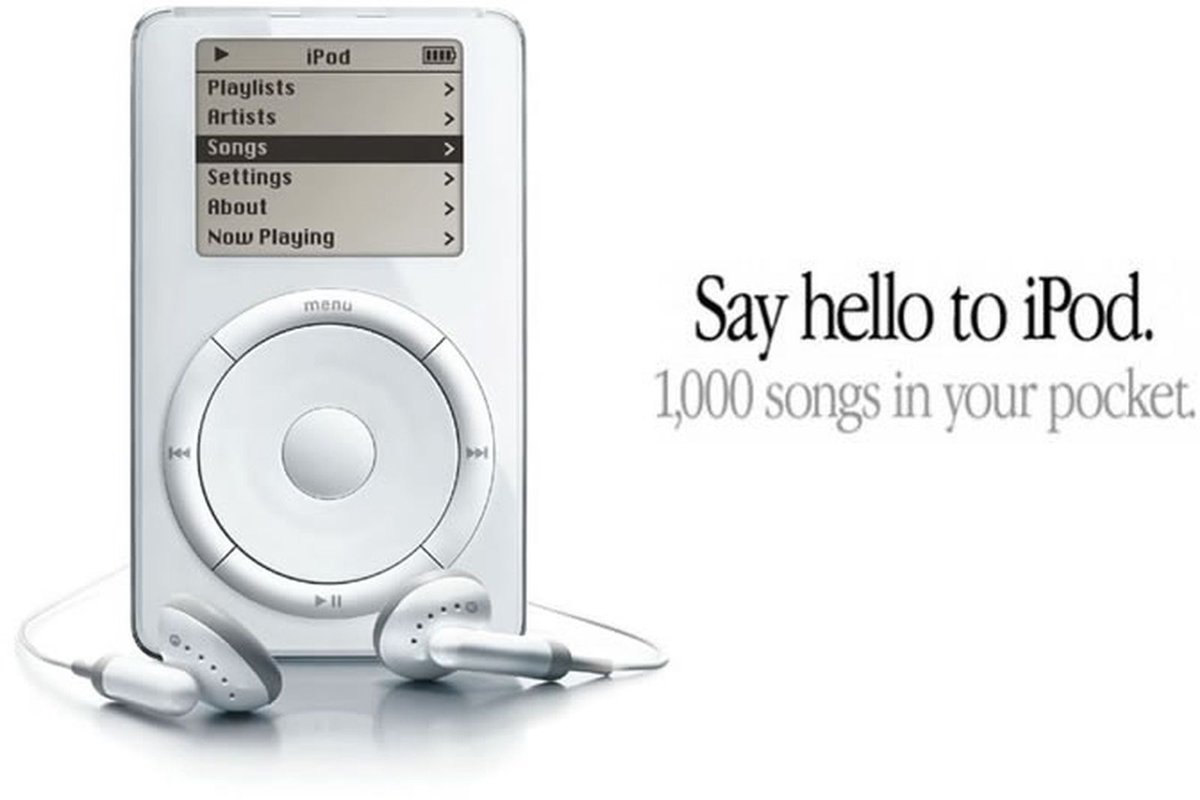
The year 2001 marked a pivotal moment in personal technology. While most portable music players struggled with limited storage and clunky interfaces, Apple introduced a device that would fundamentally change how we consumed music: the original iPod. More than just an MP3 player, the iPod 1st Generation was a bold statement, promising "1,000 songs in your pocket" and delivering an intuitive experience that felt truly revolutionary. It wasn't just a product; it was the birth of a cultural icon that redefined portable music for an entire generation and laid the groundwork for Apple's future dominance in consumer electronics.
The Dawn of a Revolution: The Original iPod (1st Generation)
Unveiled on October 23, 2001, and going on sale just a few weeks later on November 10, the first-generation iPod (model M8541) wasn't the first digital music player, but it was certainly the most elegant and user-friendly. Its sleek, minimalist design, featuring a crisp monochrome LCD screen and a groundbreaking mechanical scroll wheel, instantly set it apart. This device, initially priced at US$399 for a 5 GB hard drive, offered unprecedented storage capacity at a time when flash-based players held mere dozens of songs.
The design was a marvel of its time, fitting comfortably in the hand with its signature white plastic front and polished stainless steel back. It quickly became synonymous with cool and innovation. To truly appreciate its impact and the thought behind its creation, we recommend delving into its origins with our dedicated guide on History & Design Evolution.
An Intuitive Experience: Early Software and User Interaction
The magic of the ipod 1nd generation wasn't just its capacity; it was its user experience. With five physical buttons (Play/Pause, Menu, Next/Fast Forward, Previous/Rewind, and the central Select button), navigation was surprisingly fluid. The mechanical scroll wheel, a tactile innovation, allowed users to effortlessly glide through their music library. This intuitive interface, coupled with Apple's then-Mac-only iTunes software, made managing and enjoying music a seamless affair.
While primarily a music player, early iPods also offered limited PDA-like functions, allowing users to view text files or synchronize contacts and schedules. Hidden "Easter egg" games like Brick, Parachute, and Solitaire provided simple entertainment. The smooth, anti-aliased graphics and sliding animations on its monochrome display contributed to a premium feel that belied its simplicity. For a deeper dive into the original operating system and how users interacted with this groundbreaking device, you'll want to Explore User Experience and Software.
Under the Hood: The Original Specifications That Powered a Revolution
The first-generation iPod packed impressive technology into its compact form. It featured a 1.8-inch hard drive, offering 5 GB of storage initially, with a 10 GB model introduced in March 2002. Powering this experience was a 10-hour battery life, significant for the era. Data transfer and charging were handled exclusively via a FireWire port, a technology Apple championed for its speed.
Inside, each iPod included 32 MB of RAM, primarily used for caching songs to enhance performance and save power from the spinning hard drive. A small NOR flash ROM chip contained the bootloader, ensuring a quick startup. Understanding these core components is key to appreciating the engineering feat it represented. For a complete breakdown of what made the original ipod 1nd generation tick, including its processing power and connectivity, be sure to View technical specifications. Explore full product.
A Legacy Beyond Discontinuation: Collecting and Valuation
Though the entire iPod Classic line, including the original, was discontinued in 2014, its appeal has only grown. The 1st generation iPod, in particular, holds a special place in tech history and the hearts of collectors. Its pioneering role, distinctive mechanical scroll wheel, and relatively limited production run make pristine examples highly sought after. Unlike modern streaming-only devices, the iPod offered true ownership of music and a tangible connection to one's library, aspects many users still cherish. This nostalgic value, combined with its historical significance, drives a vibrant collector's market. If you're curious about the current market and how to assess the worth of these vintage treasures, you should Learn about collecting and valuation Discover.
Keeping the Legend Alive: Restoration and Modern Upgrades
The enduring charm of the iPod 1st Generation has fostered a passionate community dedicated to keeping these devices alive and even enhancing them. From replacing aging batteries and worn-out hard drives to more advanced modifications like integrating flash storage (replacing the fragile hard drive with an SD or M.2 SSD for improved durability, battery life, and speed) or even adding Bluetooth capabilities, there's a thriving ecosystem for restoration. These efforts not only preserve a piece of history but also make these vintage players viable for daily use once again. For anyone looking to revive their classic device or explore advanced modifications, our comprehensive Restoration & Repair Guides are an invaluable resource.
The iPod 1st Generation wasn't just a gadget; it was a cultural phenomenon that democratized portable music and forever changed our relationship with digital media. Its legacy continues to resonate, not only through the countless devices it inspired but also in the vibrant community dedicated to celebrating and extending its life. It remains a testament to innovative design and the power of a simple, elegant solution to a complex problem.