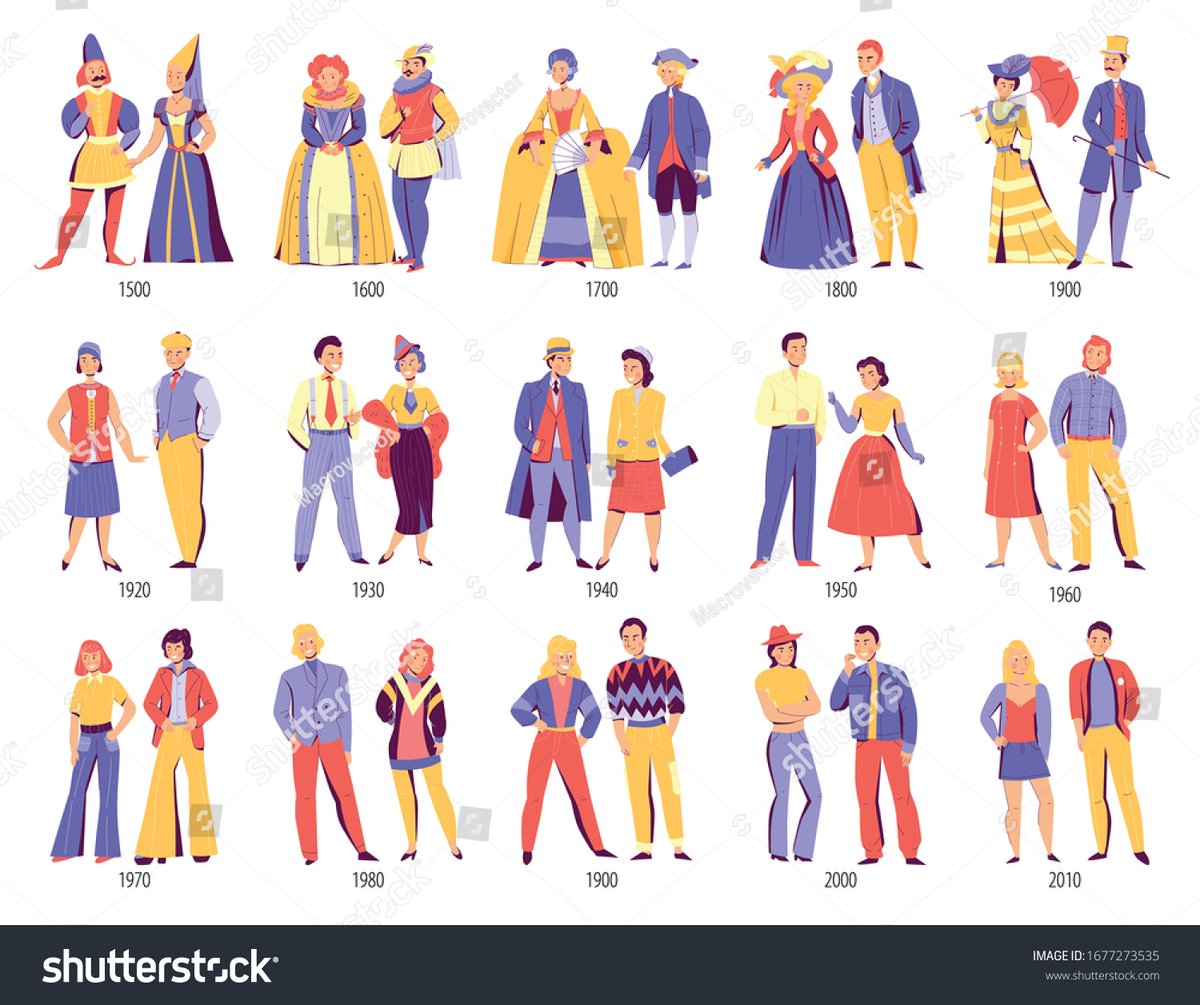
History & Design Evolution Reveals Humanity's Creative Journey Through Time
Ever stopped to truly see the cup you're drinking from, the chair you're sitting on, or the interface you're currently interacting with? Every single one is a product of design, a conscious choice made by someone to shape an object, space, or experience. The story of these choices isn't just about aesthetics; it's a grand narrative stretching back millennia, revealing how our innovations, beliefs, and even our very identities have been etched into the things we create. This isn't just a history lesson; it's an invitation to understand the profound "why" behind the "what" that surrounds us, showing us how History & Design Evolution has continuously mirrored and molded humanity's creative journey.
At a Glance: Unpacking Design Through the Ages
- Design is a mirror: It reflects a society's values, technologies, and social structures.
- From sacred to sensible: Early design often served religious or symbolic purposes, evolving into functional objects for the masses.
- Key turning points: The Industrial Revolution, Modernism, and the Digital Age fundamentally reshaped how we design and consume.
- Form follows function (and emotion): Principles like proportion, balance, and utility have been constant threads, even as styles changed dramatically.
- Contemporary design looks forward: It's multidisciplinary, adaptive, and increasingly focused on sustainability and improving human life.
- It's all connected: Design isn't just about pretty things; it's about solving problems and enhancing our daily existence.
The Unseen Language of Objects: Why Design Matters
You might think of design as something exclusive, perhaps reserved for architects, artists, or high-end fashion houses. But the truth is, design is pervasive. It's the thoughtful arrangement of elements in a garden, the intuitive layout of a grocery store, or the simple elegance of a well-made tool. It's the intentional effort to create functional, beautiful, and meaningful objects and experiences. Tracing the history of design isn't merely an academic exercise; it's about recognizing the deliberate human touch that shapes our world, revealing how each era wrestled with fundamental questions of utility, beauty, and expression.
Antiquity: Where Proportion Met Purpose
Long before "designers" as we know them existed, ancient civilizations laid the bedrock principles that still guide creators today. This era wasn't just about building; it was about establishing universal ideals.
In places like Ancient Greece and Rome, design was inseparable from philosophical concepts of beauty and order. Think of the Parthenon: its columns, pediments, and friezes weren't just decorative; they embodied principles of proportion, symmetry, and harmony. These elements were meticulously calculated to create an aesthetically pleasing and structurally sound whole, inspiring awe and a sense of balance. Sculpture and decorative arts from this period similarly championed naturalistic forms and an idealized human physique, setting a standard for classical beauty that would be revisited for centuries.
Meanwhile, Ancient Egypt approached design with a profound emphasis on harmony and meaning. From the monumental scale of the pyramids, designed to convey power and eternal life, to the intricate hieroglyphics that adorned temple walls, every line and symbol carried deep significance. Their design wasn't just about outward appearance; it was about communicating spiritual truths and maintaining cosmic order, showcasing a sophisticated understanding of visual language.
The Middle Ages: Divine Inspiration in Gothic Grandeur
As the classical world faded, Europe entered a period where design took a distinctly religious turn. The Middle Ages, often stereotyped as "dark," were in fact an era of incredible design innovation, particularly in architecture.
The emergence of Gothic architecture stands as a testament to this period's artistic and engineering prowess. Cathedrals like Notre Dame or Canterbury weren't merely buildings; they were elaborate sermons in stone, designed to uplift the human spirit towards the heavens. Their characteristic upward lines, soaring vaults, intricate stained-glass windows, and complex ornamentation all worked in concert. The stained glass, in particular, transformed sunlight into divine illumination, while gargoyles and elaborate carvings told biblical stories to a largely illiterate populace. This design was about transcendence, creating an immersive experience that fused aesthetic beauty with profound spiritual meaning.
Renaissance: Rebirth of Idealism and Humanism
Following the strict religious focus of the Middle Ages, the Renaissance swept across Europe, breathing new life into ancient ideals while firmly planting humanity at the center of the universe. Design during this period was a celebration of human potential and the natural world.
Artists and designers of the Renaissance, like Leonardo da Vinci and Michelangelo, avidly revived classical principles, but infused them with a newfound emphasis on naturalistic and realistic forms. Whether in painting, sculpture, or architecture, there was a meticulous attention to human anatomy, perspective, and emotional expression. Interiors, furniture, and clothing from this era showcased harmony, balance, and often astonishingly detailed elaboration. You see this in the elegant, balanced proportions of Renaissance palaces, the richly carved furniture, and the flowing, yet structured, garments that became symbols of wealth and status. It was a time when design sought to perfect the world through human ingenuity and a deep appreciation for beauty.
Baroque: Drama, Emotion, and Grandeur Unleashed
Where the Renaissance sought balance and perfection, the Baroque era burst forth with exuberance, dynamism, and unbridled emotion. This period, roughly spanning the 17th and early 18th centuries, was a reaction against the perceived rigidities of earlier styles, embracing a more theatrical and elaborate aesthetic.
Baroque design was all about creating a sense of awe and movement. It introduced dramatic contrasts—light and shadow, smooth and rough textures—and an abundance of opulent forms. Think of the Palace of Versailles with its sprawling gardens, gilded interiors, and elaborate frescoes; every element was designed to impress, to convey power, and to evoke strong feelings. This was not subtle design; it was bold, grand, and rich in aesthetic, emotional, and social meanings, from the ornate furniture that swelled with carved details to the sweeping, curved lines of its architecture.
The Industrial Revolution: Design for the Masses
The early 19th century brought about a seismic shift that would forever alter the landscape of design: the Industrial Revolution. This era wasn't about a new style, but a new method of creation, moving away from individual artisanal craft towards mass production.
Suddenly, designed objects—from furniture and textiles to tools and household goods—could be produced faster, cheaper, and in greater quantities, making them accessible to a wider population than ever before. This wasn't without its growing pains; early mass-produced items often sacrificed quality or beauty for efficiency. However, it also sparked innovation in materials, with new substances like steel, glass, and concrete emerging as foundational building blocks for modern construction and product design. The challenge for designers became: how do you marry the efficiency of the machine with the artistry of the human hand? This question would drive much of the design evolution in the subsequent centuries.
Modernism & Art Nouveau: Bridging Art and Industry
As the 19th century waned and the 20th began, designers grappled with the implications of industrialization. Two distinct, yet sometimes overlapping, movements emerged: Art Nouveau and early Modernism.
Art Nouveau, flourishing in the late 19th and early 20th centuries, was a conscious effort to unite art with industry. It sought to inject beauty into everyday objects, creating elegant, flowing lines and organic motifs inspired by nature—think of swirling plant forms, delicate insects, and graceful female figures. From furniture and jewelry to architecture and graphic design, Art Nouveau emphasized a total artistic style, focusing on making functional objects aesthetically attractive and unique, a clear rejection of the drabness sometimes associated with early mass production.
Concurrently, the seeds of Modernism were being sown, driven by a desire for functionalism and a rejection of historical ornamentation. Early modernists began to strip away superfluous decoration, advocating for clean lines and a focus on the inherent properties of materials. They asked: what if an object's form was purely dictated by its function?
Bauhaus: Form Follows Function, Simplicity as a Creed
Perhaps no single institution shaped modern design as profoundly as the Bauhaus school, founded in Germany in 1919 by architect Walter Gropius. More than just an art school, Bauhaus was a radical experiment, aiming to unify art, craft, and technology into a single, cohesive vision.
The core philosophy of Bauhaus emphasized functionality, simplicity, and the honest use of modern materials. Its designers believed that well-designed objects should be accessible and affordable for everyone, not just the elite. They championed mass-producible objects that prioritized utility and clarity, effectively blurring—and often erasing—the traditional distinction between artist and artisan. From the stark, geometric lines of Marcel Breuer's tubular steel furniture to the elegant typography of Herbert Bayer, Bauhaus principles influenced everything from architecture and graphic design to product development, becoming a foundational pillar for what we now recognize as modern design.
Minimalism: Less is More, Purity of Form
A direct and powerful consequence of the Bauhaus philosophy was the rise of Minimalism. Emerging and gaining traction in the mid-20th century, Minimalism wasn't just a style; it was an ethos, a deliberate attempt to eliminate the superfluous and emphasize the purity of lines and forms.
Minimalist designers believed that true beauty lay in simplicity, clarity, and the essential nature of an object. This movement drastically influenced interior design, where spaces were decluttered, furniture became sleek and unadorned, and color palettes were often monochromatic or subdued. Its principles also permeated graphic design, digital interfaces, and fashion, advocating for uncluttered layouts, intuitive functionality, and an emphasis on core elements. The idea was to create peace and focus by reducing visual noise, making every remaining element critically important.
Postmodernism: Breaking the Rules with Irony and Diversity
By the latter half of the 20th century, a new generation of designers felt constrained by the strictures of Minimalism and the perceived austerity of Modernism. This gave rise to Postmodernism, a vibrant and often provocative reaction that embraced irony, diversity, and a playful rejection of established norms.
Postmodern design introduced bold colors, often clashing patterns, and a willingness to combine incompatible elements across various disciplines. In architecture, this meant whimsical facades and historical allusions; in fashion, it celebrated eclecticism and self-expression. Think of the Memphis Group with their vibrant, often sculptural furniture, or early digital advertising that blended pop culture references with surreal imagery. Postmodernism challenged the idea of a single "correct" way to design, instead reveling in variety, subjectivity, and the freedom to mix and match styles from different eras and cultures. It reminded us that design could be fun, challenging, and even a little rebellious.
The Digital Age: Interface, Interaction, and Immersion
The late 20th and early 21st centuries ushered in perhaps the most radical transformation in design since the Industrial Revolution: the advent of digital technologies and the Internet. Suddenly, design wasn't just about physical objects; it was about creating intangible experiences in virtual spaces.
This era fundamentally changed how we interact with information and each other. Design shifted to prioritize visual appeal, ease of use (user-friendliness), responsiveness, and adaptability of interfaces. In web design, mobile applications, and gaming platforms, designers had to consider new dimensions:
- User interaction: How does a user flow through a digital product?
- Animation: How do subtle movements guide attention and convey feedback?
- Sound: How do audio cues enhance the experience?
- Interactive elements: How can users directly manipulate and engage with content?
Think about the revolutionary simplicity of early digital devices. For instance, you can Explore the first generation iPod and see how its intuitive scroll wheel and minimalist screen transformed how people interacted with music, setting a new standard for user experience in a compact, mass-produced digital device. This marked a profound departure, making design a core component of our daily digital lives.
Contemporary Design: A Future Forged in Purpose
Today, design is more diverse, adaptable, and multidisciplinary than ever before. It's an exciting, complex field that seamlessly intertwines digital and physical aspects, constantly evolving to address the pressing challenges of our time.
Contemporary design is not just about aesthetics; it's deeply engaged with social, environmental, and technological issues. This means:
- Sustainability: Designers are actively exploring recycled materials, energy-saving technologies, and thoughtful spatial planning to minimize environmental impact. We see this in everything from eco-friendly packaging to buildings designed for net-zero energy consumption.
- Human-Centered Solutions: The focus is on improving human life through creative solutions, whether it's designing more accessible public spaces, intuitive healthcare interfaces, or products that enhance well-being.
- Integration: Design extends far beyond traditional forms, becoming an integral part of our digital lives and everyday services. From designing smart city infrastructure to optimizing the user journey for a food delivery app, design is about orchestrating seamless experiences.
Nations like Portugal, for example, are actively adopting and developing modern design directions, reflected both in innovative architecture that blends tradition with contemporary flair, and in their thriving digital products and services sector. It's a testament to how design, no matter where you are in the world, remains a dynamic force for progress and problem-solving.
What Does This Mean for You? Embracing Design in Your World
Understanding the History & Design Evolution isn't just about appreciating the past; it's about empowering you to better understand and shape your present and future. Every object, every space, every digital interaction you encounter has been designed with intention, or sometimes, with a lack thereof.
Here’s how you can embrace this perspective:
- Become a more discerning consumer: Recognize the thoughtfulness (or lack of it) in the products you buy and the services you use. Why does one app feel intuitive while another frustrates you? It’s often down to design.
- See your environment with new eyes: Notice the architectural styles around you, the choices made in your home's layout, or even the typography on a billboard. Each element tells a story about its creators and its time.
- Apply design thinking to your own challenges: Design isn't just for professionals. The principles of problem-solving, empathy, iteration, and creating user-friendly solutions can be applied to anything from organizing your personal finances to planning a community event.
- Appreciate the power of intention: Whether it's the ancient Egyptians building pyramids to connect with the divine, the Bauhaus advocating for functional simplicity, or today's designers tackling climate change, design is always a purposeful act. Recognizing this intent can deepen your appreciation for the human spirit's endless capacity for creation.
From the grand temples of antiquity to the sleekest digital interfaces of today, design has always been a conversation between humanity and its environment. It's a continuous quest for beauty, utility, and meaning, revealing that our creative journey is, and always will be, a work in progress.